
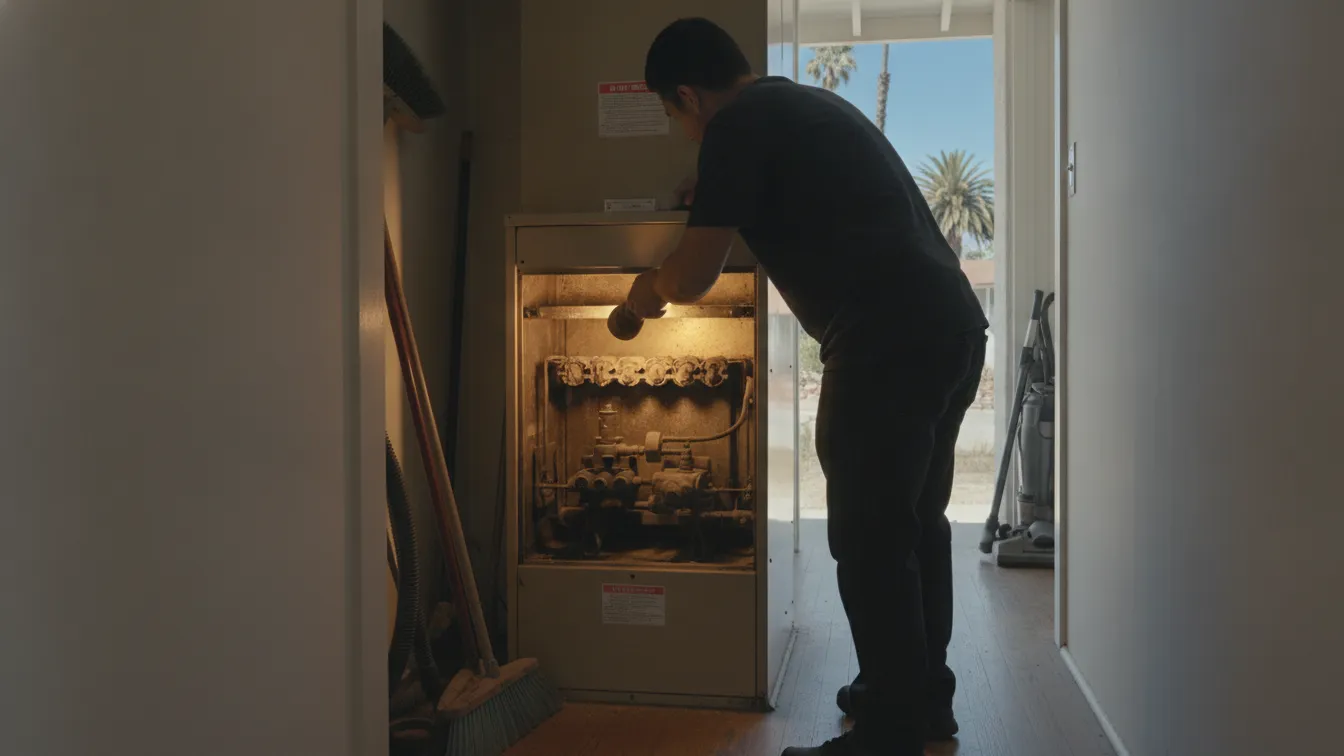
Furnace and heater repair in Los Angeles
No heat, a furnace that starts and stops, or a wall heater that will not light. We find the fault, explain it and price the repair before we start.
Los Angeles does not need heat often, which is why a furnace tends to fail on the first cold night.
A furnace can sit unused from spring to late fall. Dust settles on the burners, a flame sensor gets a coating, a motor bearing dries out. Then the first cold evening comes, the thermostat calls for heat and the weak part gives up.
We repair gas furnaces in attics, closets and garages, and the wall and floor furnaces found in older homes. We work across Los Angeles, from Santa Monica and West Hollywood to Pasadena, Glendale, Van Nuys, Encino, Thousand Oaks and the South Bay. If you are not sure the heater is the problem, all our heating and cooling services are sorted by symptom.
Smell gas? Leave first
If you smell gas, or a carbon monoxide alarm goes off, get everyone out of the house. Do not switch lights or appliances on or off on the way. Call your gas company or 911 from outside. Once the gas company says the house is safe, call us and we will find what caused it.
The common furnace faults
Each symptom points to a short list of causes, and we test those first.
No heat at all
A failed igniter or a pilot that will not stay lit, a dirty flame sensor, a tripped safety switch, a blown fuse or a thermostat that is not calling for heat.
Starts, then shuts off
Short cycling. The furnace lights and shuts down a few minutes later. Often a dirty flame sensor, a clogged filter that lets it overheat, or a limit switch doing its job.
A burning smell on the first cold night
A dusty smell for the first few minutes is normal after months off. A smell that lasts, or smells like hot plastic or wiring, means switch it off and call us.
The blower will not stop
A fan that runs all the time can be a thermostat set to "on", a stuck relay, a failed control board or a limit switch that has tripped.
Loud or new noises
A bang when the burners light, a squeal from a blower belt or bearing, or a rattle from a loose panel.
Heat, but not enough
A clogged filter, leaking ducts, a weak blower or a furnace too small for the house. We check the airflow before we blame the furnace.
Wall and floor furnaces in older homes
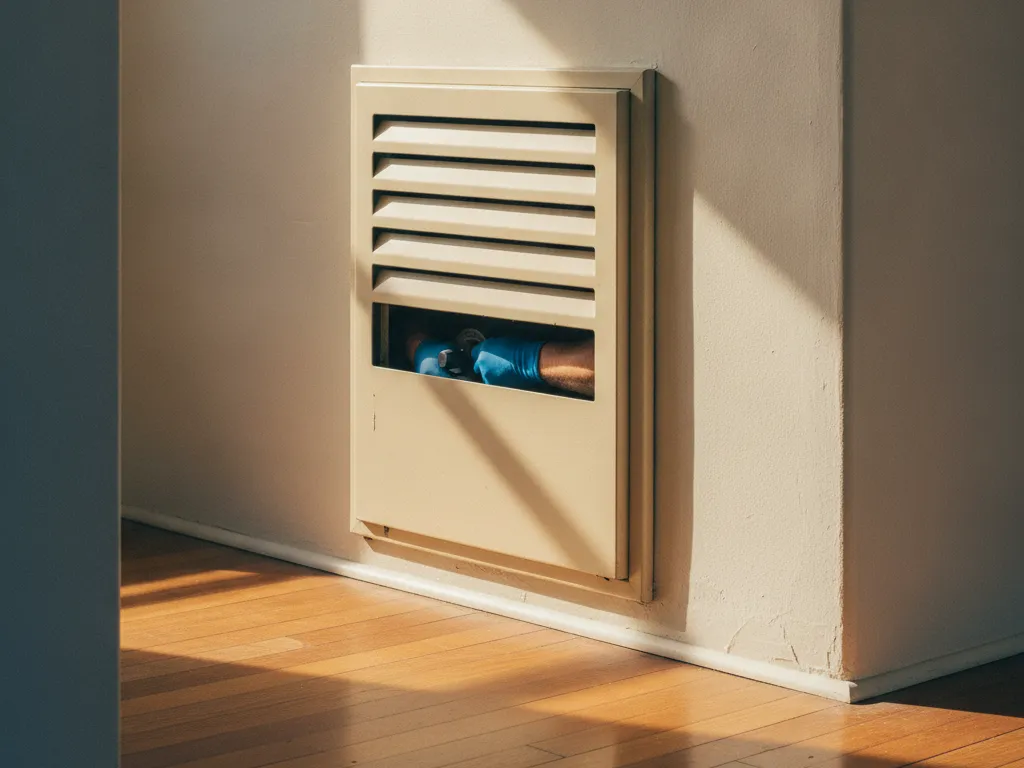
Many older Los Angeles houses were never built with ducts. They are heated by a wall furnace, set into a hallway or living room wall, or a floor furnace under a grille in the floor. Plenty of these heaters are still in daily use.
Repairing one is different from repairing a ducted furnace. There are no ducts and often no blower. Heat rises off the unit and spreads through the room. The parts that fail are the pilot, the thermocouple that proves the pilot is lit, the gas valve and, on some models, a small fan. The vent that carries the exhaust out through the wall or roof must be clear and sealed.
These units can be decades old, and parts for some models are hard to find. A cracked firebox or heat exchanger on a wall furnace is a safety problem, and it usually means replacement rather than repair. Keep furniture, curtains and boxes well clear of a wall or floor furnace, and never cover the grille.
When repair stops making sense
We will tell you when a furnace is worth fixing and when it is not. The questions we weigh with you:
- What failed? An igniter, flame sensor or limit switch is a routine repair. A cracked heat exchanger is not a repair we would recommend on an older furnace.
- How old is it? A furnace that is near the end of its life may need another repair soon.
- The rule of thumb. Multiply the age of the furnace by the repair price. Above 5,000, replacing it is usually worth pricing.
- Does it heat the house well? A furnace that never kept the house warm will not start doing so after a repair.
If replacement is the better spend, our furnace installation and replacement service covers a new furnace, a new wall unit or a move to a heat pump, which heats and cools with one system. Our guide to furnace replacement cost explains what moves the price.
What the visit looks like
We keep you informed from the first call.
You call or send the form
Tell us what the heater is doing, what type it is (a ducted furnace, a wall furnace or a floor furnace) and its age if you know. A photo of the label inside the door helps.
We diagnose before we replace anything
We check the gas supply, ignition, flame, venting, safety switches, blower and controls, and find the part that failed.
You get the fault and the price
We explain what we found in plain words and what it costs to fix. If a repair is not safe or not worth it, we tell you.
We fix it and test it
After the repair we run the heater through full cycles and check the flame and the venting before we leave.
Why call Air Cove HVAC
We know gas furnaces and the old wall and floor heaters that many Los Angeles homes still rely on. We are licensed and insured. We test safety before comfort, and we never leave a heater running that we think is unsafe.
A furnace check in the fall catches a dirty sensor or a worn igniter before the cold night does. See AC tune-ups and HVAC maintenance for what a heating check covers. To book a repair, call us or send us the details. We answer every day, 7 a.m. to 11 p.m.
Furnace repair questions
What is the most common problem with furnaces?
A dirty filter, and the problems it causes. A clogged filter makes the furnace overheat and shut itself off. After that, a dirty flame sensor and a worn igniter are the common failures. All three are quick fixes once they are found.
What is the most expensive thing to fix on a furnace?
A cracked heat exchanger. It is the part that keeps the flame and exhaust away from the air you breathe, and it is costly to replace. On an older furnace a crack usually means replacing the furnace. A failed blower motor, inducer motor or control board also costs more than the routine repairs.
How much should furnace repair cost?
It depends on what failed. A flame sensor and a heat exchanger are both furnace repairs, and they are nowhere near the same price. We diagnose first and tell you the price before we do any work.
Is a burning smell normal when I first turn on the heat?
A light dusty smell for the first few minutes after months off is normal. It is dust burning off the burners. If it lasts, gets stronger or smells of plastic or wiring, turn the heater off and call us. If you smell gas, leave the house and call the gas company from outside.
Do I need to be home for the repair?
Yes. Someone needs to let us in, and we need to reach the furnace and the thermostat. We also want to agree on the repair with you once we have found the fault.
Heater not keeping the house warm? Tell us what it is doing and where the furnace sits.
Get your heat back on
Call us, or send the form and we will call you back. We work across Los Angeles, seven days a week.