
AC tune-ups and HVAC maintenance
A seasonal check of your air conditioner, furnace or heat pump. We clean what needs cleaning, test what wears out and tell you what we found.
A tune-up before the heat arrives catches the small faults that stop an air conditioner on the hottest day.
An AC tune-up is a service visit for a system that still works. HVAC maintenance is the same idea for the whole system, heating included. We clean the parts that collect dirt, test the parts that wear out and check that the system is doing its job. A weak part found in spring is a small repair. In August it means a hot house.
We maintain central air conditioners, gas furnaces, heat pumps and ductless mini splits in homes across Los Angeles, from Torrance and Long Beach to Culver City, Burbank, Sherman Oaks and Simi Valley. If you are not sure what your system needs, see all our heating and cooling services.
Why the valleys should not skip it
Homes in the San Fernando and Santa Clarita valleys lean on air conditioning far more than homes near the coast. In Woodland Hills, Sylmar or Santa Clarita, the air conditioner does far more work than it does in Culver City or Santa Monica. Summer afternoons inland are hotter, and a system there runs for hours at a stretch, day after day.
That hard work is what wears out capacitors, fan motors and contactors, and it is what cakes the outdoor coil with dust. So if you live inland, the best time for a tune-up is spring, before the first heat wave. Closer to the coast, where the system runs less, a check every year is still worth doing.
What a tune-up checks, for cooling
Each item is a part that fails or a problem that grows if nobody looks.
Filter and airflow
We check the filter and the airflow across the indoor coil. A clogged filter is the simplest cause of a frozen coil and a system that will not cool.
Outdoor coil and fan
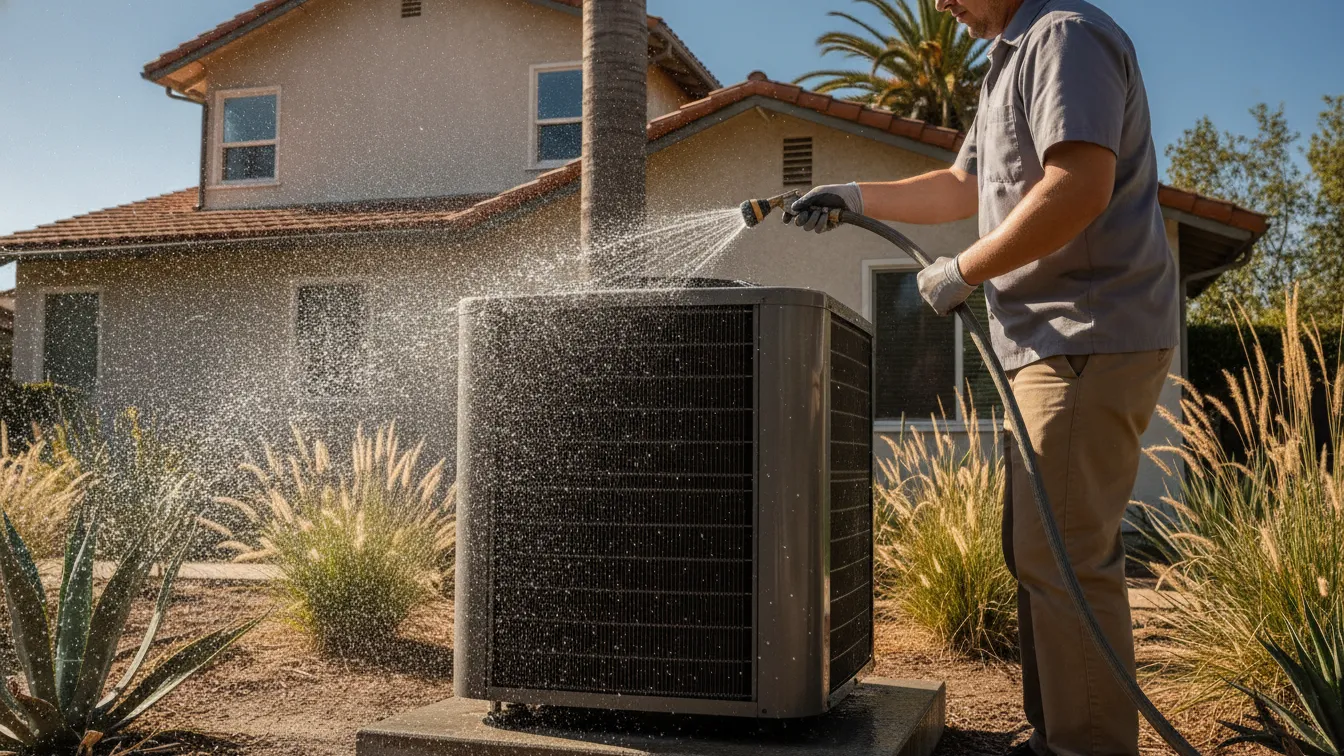
We clean the outdoor coil, clear debris from the unit and check the fan motor and blade. A dirty coil makes the compressor work harder and hotter.
Capacitor and contactor
We test the capacitor and look at the contactor. These start the compressor and fan, and a weak capacitor is a common reason an AC stops on a hot day.
Refrigerant and temperatures
We measure the system pressures and the temperature drop across the coil. Numbers out of range can point to a leak or a charge problem.
Condensate drain
We clear the drain line and check the pan and any condensate pump. A blocked drain can soak a ceiling or a closet floor.
Thermostat and controls
We check that the thermostat reads the room correctly and that the system starts and stops when it should.
What a tune-up checks, for heating
Heating gets its own check before the cold nights, because a furnace that sat all summer can have a surprise waiting.
Burners and igniter
We inspect and clean the burners, and check the igniter or pilot and the flame sensor. These are the parts that stop a furnace from lighting.
Heat exchanger and venting
We look over the heat exchanger and the flue for cracks, rust and blockages. This is where safety lives on a gas furnace.
Blower and safety switches
We check the blower motor and the limit and pressure switches that shut the furnace down when something is wrong.
Heat pump heating mode
On a heat pump we test heating mode, the defrost cycle and the reversing valve, which switches the system between heating and cooling.
What you can do between visits
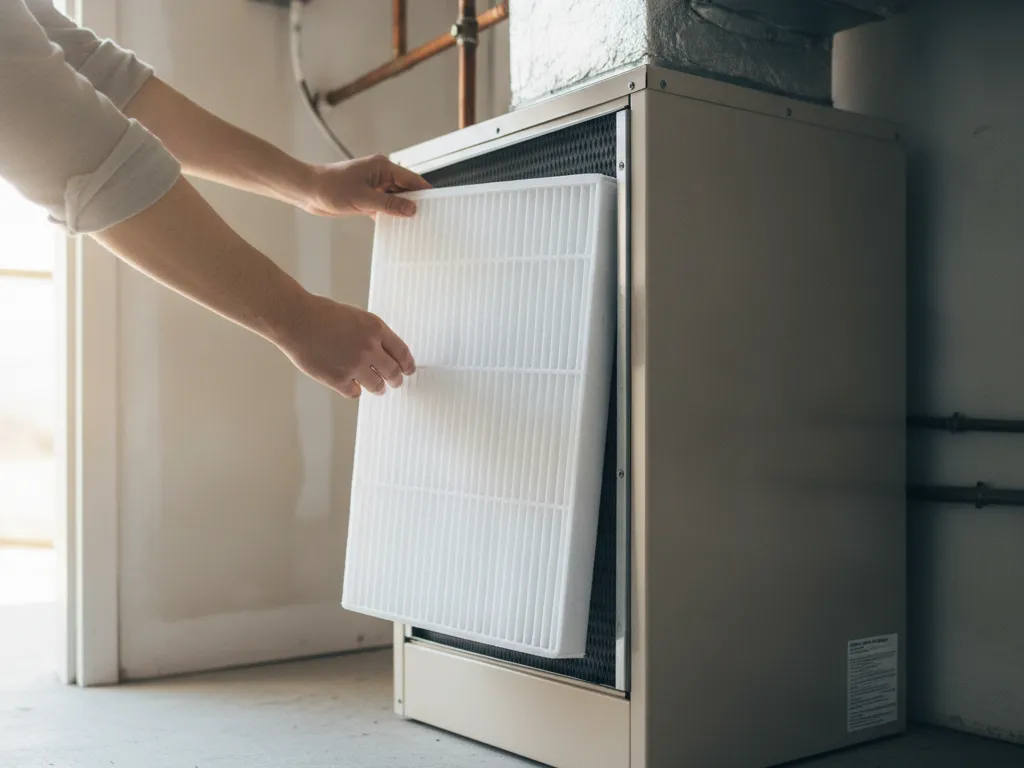
- Change the filter. Check it every month or two in summer, and change it when it looks gray. Pets, dust and wildfire smoke fill it faster.
- Keep the outdoor unit clear. Leave a couple of feet of space around it. Trim plants back, and keep leaves, boxes and garden furniture away from the coil.
- Keep supply and return vents open. Closing vents in unused rooms can starve the system of air.
- Watch the drain. If you see water around the indoor unit, call us before it becomes a ceiling stain.
Leave the rest to us. Refrigerant work needs EPA certification, and the electrical and gas parts of a system are not safe to open. If the air from the vents smells dusty even with a clean filter, air duct cleaning may be the next step. An old thermostat that loses its settings is worth replacing, and thermostat installation covers smart and standard models.
What happens at the visit
The visit is a check and a clean. Nothing gets replaced without your say.
You book the visit
Call us or send the form. Tell us what system you have, how old it is if you know, and whether anything has seemed off.
We check and clean
We work through the cooling or heating list above, or both, and clean the coil, drain and burners as needed.
We tell you what we found
You get a plain account of the condition of the system, with any worn parts and what they mean.
Problems are priced separately
If we find a part that needs replacing, we tell you what it costs before we touch it. You decide whether to fix it now, later or not at all.
Why call Air Cove HVAC
We know which parts wear out on which systems, and what a small fault turns into if it is left. We are licensed and insured. If a part is close to failing, we show you why. When a fault turns out to be bigger than a tune-up, our AC repair and furnace and heater repair services pick it up from there.
To book, call us or send us the details. It helps to know the type of system, its rough age and the date of its last service if you have it. We answer every day, 7 a.m. to 11 p.m.
AC maintenance questions
What maintenance should be done on an AC unit?
Change or clean the filter, keep the outdoor unit clear and have a tune-up once a year. At the tune-up we clean the outdoor coil, test the capacitor and contactor, check the refrigerant pressures, clear the condensate drain, check the fan motors and confirm the thermostat controls the system correctly.
How often does air conditioning need to be serviced?
Once a year, in spring, before the heat arrives. A system that also heats, like a heat pump or a furnace and AC pair, benefits from a heating check in the fall too. Homes in the inland valleys, where the system runs hardest, should not skip a year.
Does AC require regular maintenance?
Yes. An air conditioner will keep running for a while without it, but dirt on the coil and a weak capacitor make it work harder, cost more to run and fail sooner. Regular care catches those faults while they are small.
How much should AC maintenance cost?
The price of a tune-up depends on the system and whether heating is checked too. Any repair we find is quoted separately, and we tell you the price before we do it.
Do I need to be home for the tune-up?
Yes, someone needs to be home. We need to reach the indoor unit, the filter and the thermostat as well as the outdoor unit, and we like to show you what we found before we leave.
Due for a tune-up? Tell us what system you have and we will set up the visit.

Get ahead of the heat
Call us, or send the form and we will call you back. We work across Los Angeles, seven days a week.