
Duct repair, sealing and replacement
One room that never cools, dust at the vents or a bill that keeps climbing. We find where the air is escaping and fix the ducts.
Leaking ducts lose the air you paid to cool before it reaches the room.
Ductwork is the network of metal and flexible tubes that carries air from your furnace or air conditioner to each room and back. In many Los Angeles homes it runs through a hot attic or a crawlspace, out of sight. When a joint pulls apart or a run gets crushed, cooled or heated air leaks into the attic, and dusty attic air gets pulled back into the house.
We do three kinds of duct work. Sealing closes the leaks at joints and seams. Repair reconnects, supports and replaces damaged sections. Replacement puts in new runs, or a new duct system when the old one is past saving. We work on the ducts of houses, townhomes and condos with a central system, across Los Angeles County and eastern Ventura County, from the Westside and Hollywood to Burbank, Glendale, the San Fernando Valley, Santa Clarita, Simi Valley and Long Beach. If you are not sure the ducts are the cause, start with all our heating and cooling services.
Signs your ducts are leaking or failing
Duct problems hide in the attic, but they show up in the house. These are the signs we follow.
One room always hot or cold
A crushed or disconnected run can starve one room while the rest of the house is fine. It is often the room at the far end of the longest duct.
Dust at the vents
A leaking return pulls dusty attic air into the system and blows it out into every room. Dark streaks around a vent are a common clue.
A higher bill for the same comfort
When air escapes into the attic, the system runs longer to reach the same temperature, and the electric or gas bill follows.
Weak airflow at some vents
Hold your hand to each vent with the system running. A vent that barely moves air often has a kinked, sagging or loose duct behind it.
Crushed or loose runs in the attic
Flexible ducts that have been stepped on, pinched by framing or have slipped off their fittings are easy to spot once someone goes up and looks.
Sealing, repairing or replacing
We match the fix to what we find. Here is how we decide.
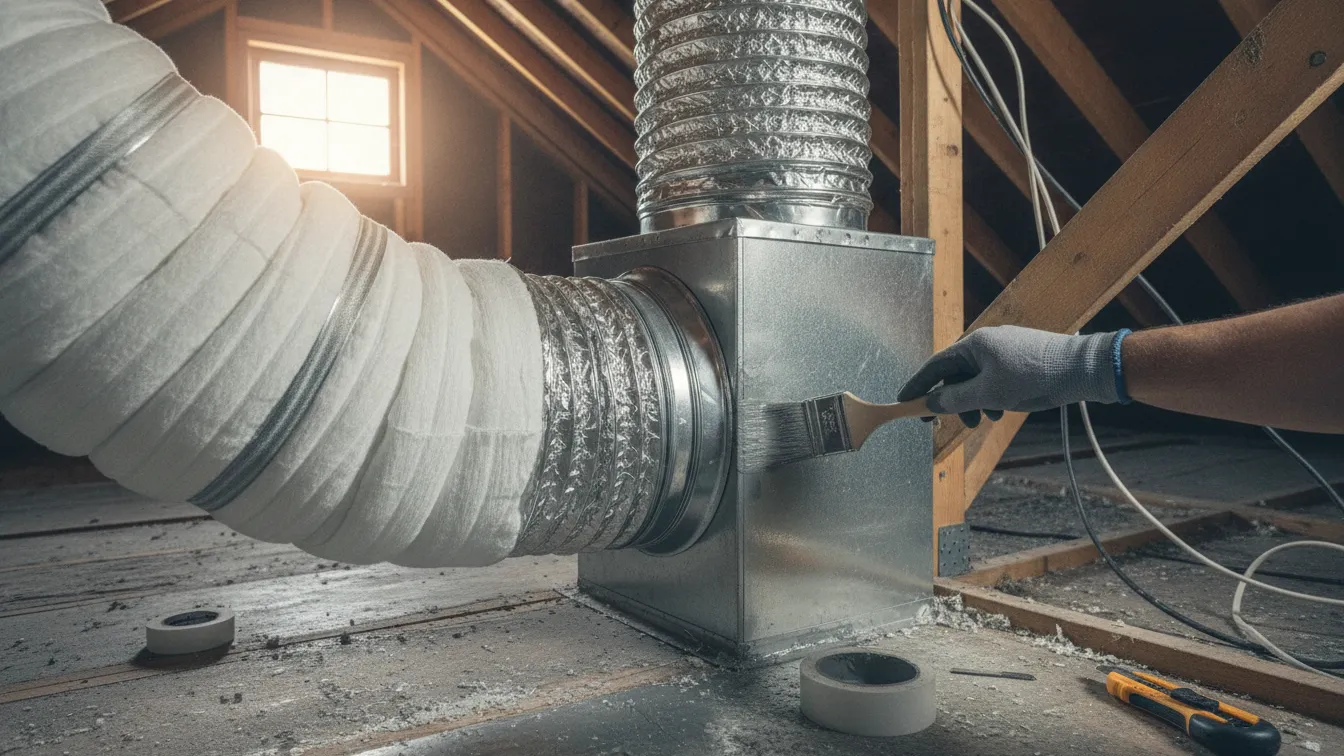
- Seal when the ducts are in good shape but the joints leak. We brush mastic, a thick paste that dries flexible, over the joints and seams, or use foil tape made for ducts. Cloth duct tape dries out and lets go in a hot attic, so we do not rely on it.
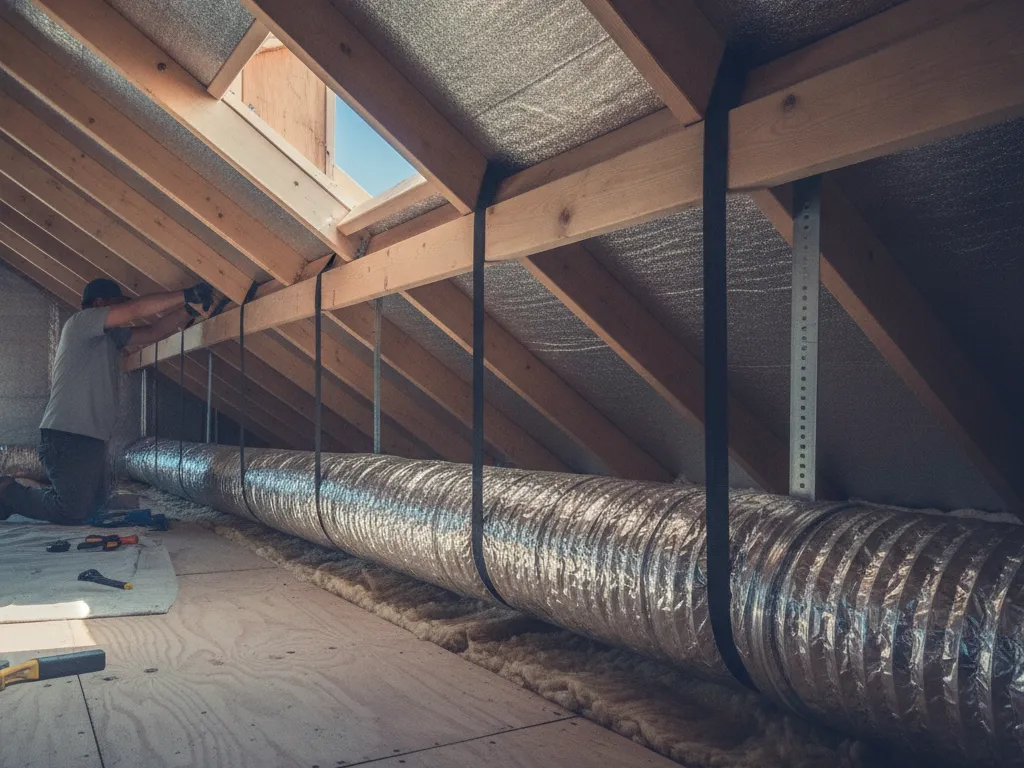
- Repair when runs are crushed, sagging or disconnected. We reconnect them, hang them with proper straps so they run straight, and replace the damaged sections.
- Replace when the ducts are brittle, the insulation is falling off, or the ducts are too small for the system. Old flexible duct breaks down after years in attic heat, and patching it only moves the leak along.
Flexible or rigid duct. Flexible duct is quick to run and bends around framing, but it has to be pulled tight and supported, because sags and sharp bends cut the airflow. Rigid metal duct keeps its shape and moves air with less resistance, and it takes longer to install. Many systems use both, with rigid trunk lines and flexible runs to the rooms. We choose what suits the space and the airflow the system needs.
The Title 24 leakage limits
California's energy code, Title 24, sets how much a duct system may leak. When the ducts are tested, usually as part of replacing a furnace or an air conditioner under a permit from your city's building department, an independent HERS rater pressurizes the ducts and measures how much air escapes.
- Existing or altered ducts pass at 15 percent leakage or better.
- An entirely new duct system has to reach 5 percent or better.
The result is registered with the Energy Commission and becomes part of the permit record. That means the ducts are part of any system replacement, not an afterthought. We seal and repair the ducts before the rater arrives, so they are ready for the test. If you are planning AC installation and replacement or furnace installation and replacement, it makes sense to look at the ducts at the same time.
What the work looks like in the attic or crawlspace
Duct work happens where the ducts are, and that is usually a tight, hot space. This is how we go about it.
You call or send the form
Tell us which rooms are uncomfortable, roughly how old the house is, where the attic or crawlspace hatch is, and whether you are planning a new system.
We follow every run
We go into the attic or crawlspace and trace each duct from the furnace or air handler to the rooms. We look for loose joints, crushed runs, torn insulation and returns pulling in attic air.
You get the findings and the price
We show you what we found, with photos where we can, and explain the choices. Seal, repair or replace, and what each one costs.
We do the work and check the airflow
We protect the ceiling and the insulation, seal and reconnect the joints, re-hang sagging runs and replace damaged sections with insulated duct. Then we run the system and check the air at each room.
Why call Air Cove HVAC
We work on the whole heating and cooling system, so we look at the ducts together with the equipment they serve. A new air conditioner on leaking ducts will never perform the way it should, and we will tell you if that is where your money should go first. We are licensed and insured.
If the ducts are sound but dirty, air duct cleaning is the right job, and our guide to duct cleaning cost explains what moves that price. If they leak, cleaning alone will not stop the dust.
Duct repair and sealing questions
Is sealing your ducts worth it?
Usually yes, when the ducts run through a hot attic and they leak. More of the air you pay for reaches the rooms, the system runs less, and less attic dust gets pulled into the house. It is also part of passing the Title 24 duct test when you replace a system. If the ducts are brittle and falling apart, replacing them is the better use of the money, and we will tell you so.
What is duct sealing?
Duct sealing closes the gaps at the joints and seams of your ductwork, where air escapes. We brush mastic over the joints or use foil tape made for ducts, reconnect anything that has pulled apart, and make sure the returns only draw air from the house.
How much does duct sealing cost?
It depends on how many runs there are, how easy the attic or crawlspace is to move around in, how bad the leaks are and whether any sections need replacing. A few loose joints and a whole attic of old duct are very different jobs. We price it after we have been up and looked.
Can you seal air ducts yourself?
You can seal joints you can reach easily, in a garage or a basement, with mastic or foil tape made for ducts. Skip cloth duct tape, which fails in the heat. The attic is harder. It is hot, it is easy to step through a ceiling, and the leaks that matter are often the ones you cannot see. Only a test shows how much the whole system leaks.
How long does duct repair take?
Sealing and repairs on a typical house are usually done in a day or less. Replacing the duct system takes longer, and we give you the timing along with the price.
One room never comfortable? Tell us which one and we will trace the ducts behind it.

Get the air where it belongs
Call us, or send the form and we will call you back. We repair ducts across Los Angeles, seven days a week.